Managing water is a fundamental part of developing a residential site. Decisions about grading, roads, lots, utilities, and stormwater infrastructure all influence how water will move through the finished community.
Whether you plan for that movement or not, water will find a path. The goal is to direct that path away from homes and infrastructure while protecting neighboring properties and the long-term performance of the development.
Using industry-accepted best practices ensures effective drainage systems for residential developments are planned along with the rest of the site, not addressed after other major decisions have been made. Getting those decisions right during the planning process reduces the risk of drainage conflicts that require costly changes in the field.
When grading, infrastructure, and stormwater management work together, drainage becomes part of how the site functions instead of a problem crews have to correct later. That makes drainage planning an important site development decision with consequences that can extend well beyond construction.
Does Drainage Planning Start With Understanding the Entire Site?
Water already has natural pathways across a site before development changes the landscape. Existing topography, soil conditions, drainage patterns, surrounding infrastructure, and proposed elevations all influence where stormwater will travel once the site is developed.
Residential construction changes those conditions. Roads, rooftops, sidewalks, driveways, and other impervious surfaces reduce the amount of water that can soak into the ground and change how quickly runoff moves across the property.
By employing a broader view, unintended drainage problems are avoided and not directly built into a development.
Effective drainage planning looks at water’s intended movement across an entire development rather than treating each lot or structure independently. Identifying where runoff will collect, how it will move between lots and streets, where it will enter the storm system, and whether downstream infrastructure can handle the expected flows allow residential drainage systems to be designed around the site as a whole.
Is It Helpful if Grading and Drainage Are Planned as One System?
Grading determines more than the final shape of a development. It establishes how water will move across streets, building pads, common areas, and open spaces. Even small changes in elevation can alter those drainage paths. Water intended for an inlet or swale may collect near a structure, flow onto an adjacent lot, or saturate an area that was never intended to hold it.
Grading and drainage therefore cannot be treated as separate parts of sitework construction. Proposed elevations, slopes, drainage structures, and runoff paths need to be coordinated as the site plan is developed.
Proper grading gives water a predictable route through the site. It also gives crews clear elevations to build from and reduces field adjustments that can disrupt drainage or affect work elsewhere on the project.
Stormwater Management Is About Controlling Where Water Goes
Effective stormwater management is not simply about directing rainwater away as quickly as possible. These considerations are also critical to the overall plan and determine how the final system must perform:
- How much runoff the site generates
- How quickly it moves
- Where it travels
- Where it ultimately discharges
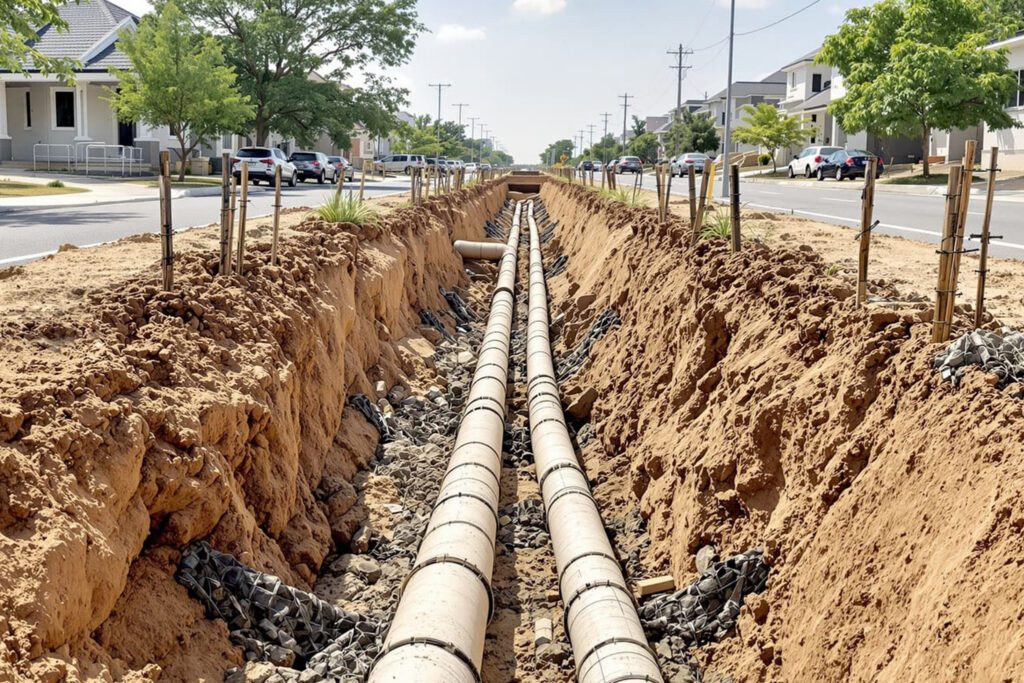
A residential drainage system plan may include storm sewers, inlets, swales, underdrains, detention or retention areas, and other controls based on the development and local requirements. Each component needs to function as part of the larger system.
Water can move successfully through one part of a development and create a problem somewhere else if downstream capacity, erosion potential, or site conditions are overlooked.
Planning stormwater management across the development provides a controlled path for runoff from collection through final discharge. The goal is not simply to move water. It is to manage it without creating a new problem downstream, whether on the development itself or on neighboring property.
How Can Early Coordination Prevent Expensive Corrections During Construction?
Early coordination allows owners, developers, engineers, and civil contractors to identify drainage conflicts and constructability concerns while adjustments are still practical. Drainage plans are not an isolated system. They should be reviewed alongside grading, utility locations, road elevations, overall access, and the construction schedule to determine the optimum solution. That review can expose conflicts that are difficult to see when each part of the project is considered independently. Resolving them early reduces the likelihood of regrading, infrastructure relocation, temporary fixes, and other corrective work.
Once sitework construction is underway, the options narrow. With road subgrades already established, utilities installed, or building pads being brought to elevation, changing one grade or drainage structure can then trigger changes across several other parts of the development.
Coordinating these decisions early makes it easier to protect the construction schedule and control costs.
Proper Drainage Protects the Development Long After Construction
The real test of a residential drainage system comes after construction is complete.
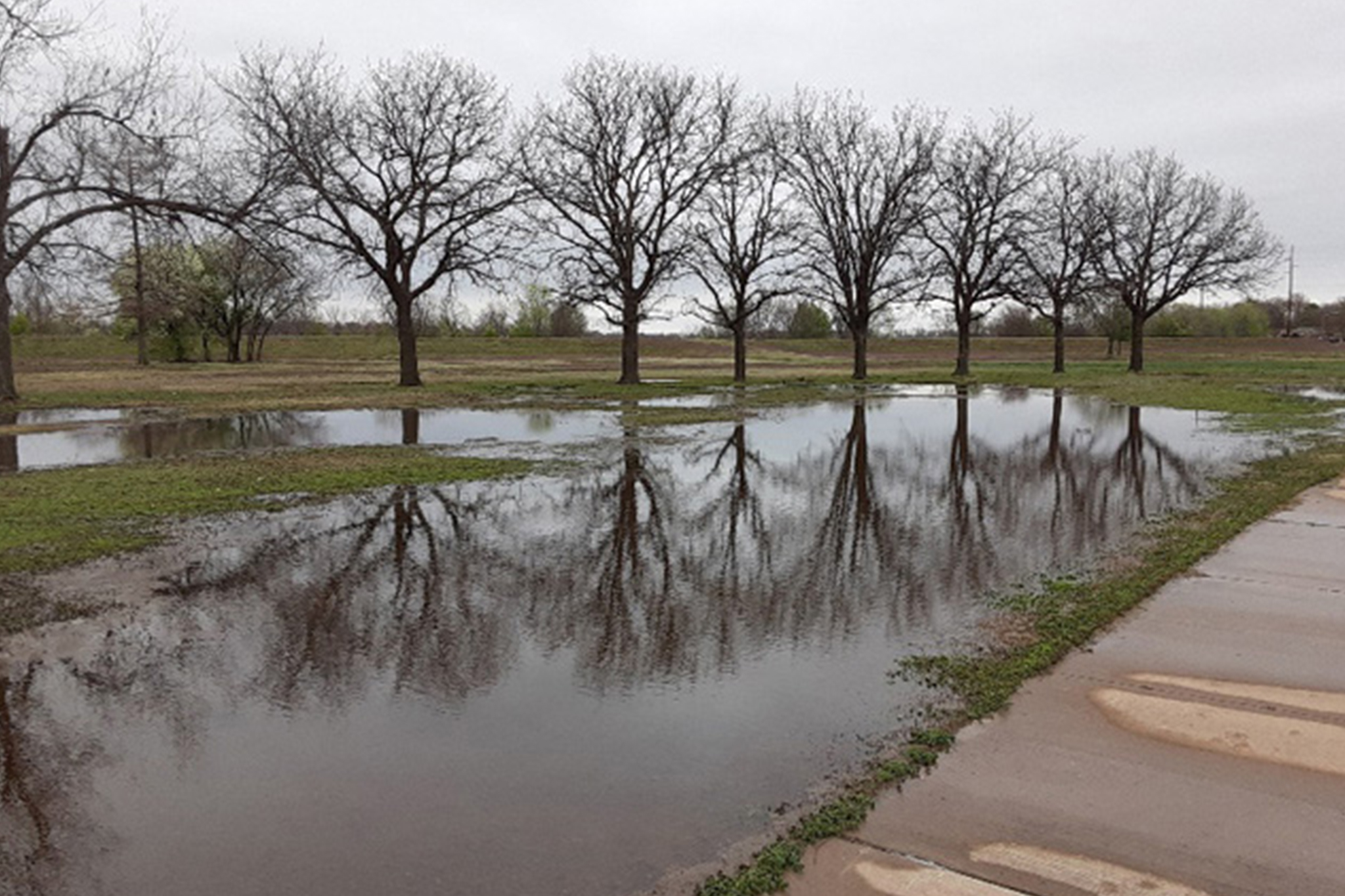
Poor drainage often shows up later as one or more of the following:
- Standing water
- Erosion
- Saturated soils
- Pavement deterioration
- Settlement
- Recurring maintenance problems
In a residential development, those issues can extend beyond a single trouble spot. They can affect streets and common areas, damage infrastructure, create problems on individual lots, and move water onto neighboring properties.
Long-term performance depends on carrying the drainage plan accurately into the field. Grades need to establish the intended drainage paths. Inlets, storm sewers, swales, and other drainage features must work at the elevations established in the design. Detention, retention, and discharge areas must also function as planned as water moves through the development.
With good drainage a result of both sound planning and disciplined construction, the design establishes how the system should work in the field.
At Brock Civil, drainage is approached as an integrated part of residential site development. Contact us to discuss how coordinating grading, drainage, utilities, and sitework can help protect your development during construction and support your new development’s long-term performance.
At Brock Civil, we don’t just move earth — we protect it.
That’s the difference between completing a job and completing it responsibly.
FAQs
Why are residential drainage systems important in new developments?
Residential drainage systems control how stormwater moves through streets, lots, common areas, and other parts of a planned development. Proper planning directs runoff away from areas where it can cause standing water, erosion, saturated soils, or infrastructure damage while supporting long-term site performance.
How does grading direct residential drainage?
Grading establishes the elevations and slopes that determine the path water takes across a site. If grading does not align with the drainage plan, runoff can collect in unintended areas or move toward structures and neighboring properties instead of designated drainage infrastructure.
When should drainage planning begin?
Drainage planning needs to be part of early site development so grading, roads, utilities, building pads, and stormwater controls can be coordinated as one system.
How does drainage planning reduce construction costs?
Early drainage planning allows conflicts to be identified while changes are easier and less expensive to make. The goal is to minimize regrading, infrastructure relocation, rework, schedule disruptions, and corrective work.

 By Brock Civil