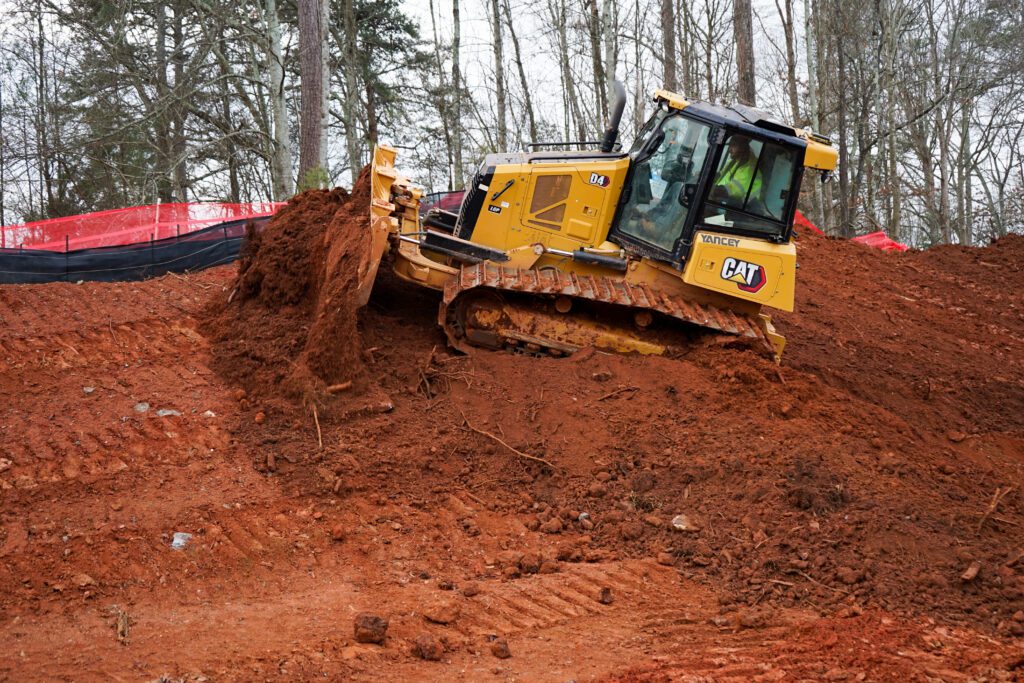
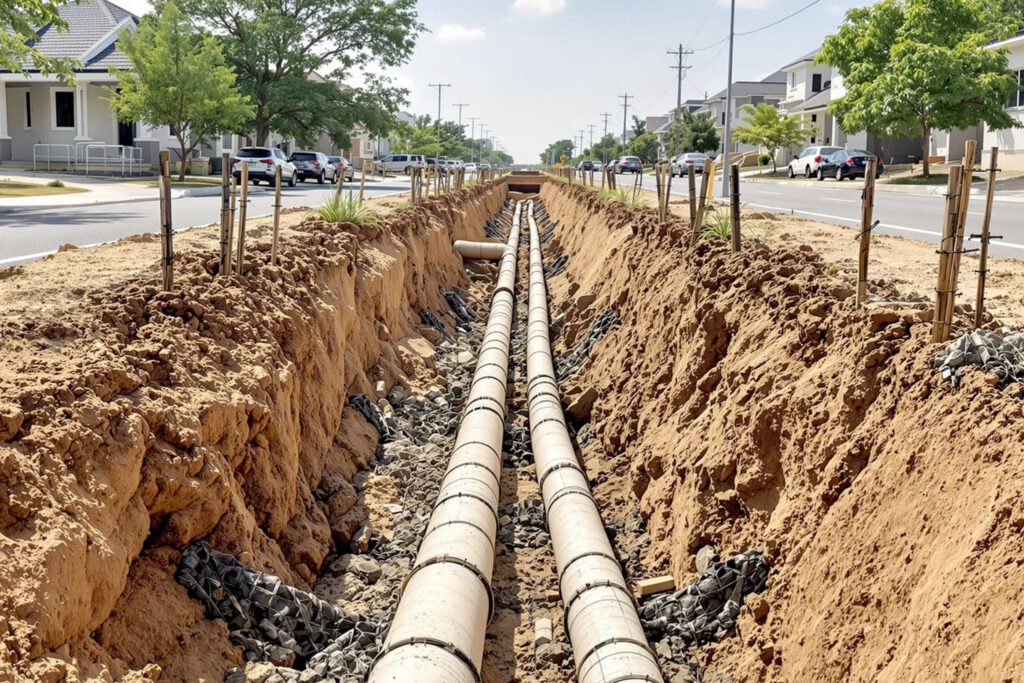
Precise utility coordination is what helps individual disciplines connect at the right stage of the project so that construction schedules can ensure crews and equipment show up on time and work is completed in sequence, including:
- Water
- Sewer
- Storm drainage
- Electric and gas
- Communications infrastructure
Proper utility coordination brings those systems, schedules, and project teams together before conflicts interfere with construction. When utility locations, field conditions, and installation requirements are not properly aligned, a single issue can lead to stopped work, rework, and delays that affect other parts of the project.
Identifying those conflicts early through proactive coordination gives the project team more options to resolve them without disrupting progress.
Utility Coordination Starts Before Sitework Construction Begins
Utility coordination starts with understanding how the site’s infrastructure will work together before installation begins. Utility locations, elevations, crossings, connection points, grading, drainage, and access all need to be evaluated in relation to one another and to the planned construction schedule.
This is especially important in residential development, where multiple utility systems must be installed within the same site while maintaining the elevations, clearances, and access needed for the rest of the project.
Coordinating these requirements early helps expose conflicts that could otherwise surface during installation. It also gives owners, engineers, contractors, and utility providers time to resolve questions before crews and equipment are scheduled around those decisions. Early decisions generally provide more options. Once construction is underway, even a small adjustment can, like dominoes, affect work that has already been completed or scheduled.
How Can Small Utility Conflicts Create Big Schedule Problems?
Not every utility conflict can be identified during design. There can be problems when existing infrastructure isn’t where plans or records indicate. Field conditions can affect planned elevations or alignments, and proposed utility lines may cross or interfere with drainage systems or other site improvements. Once sitework construction is underway, resolving those issues becomes more complicated.
When a conflict requires engineering review or a field decision, affected work may have to stop until the issue is resolved. This can have disastrous implications when crews and equipment have to be reassigned, disrupting the planned production schedule.
If the work has already been installed or completed, correcting the conflict may require removal, relocation, or reconstruction. The delay can then cascade into the next phase of construction that depends on that utility or area being complete and so on.
Effective utility coordination reduces that risk by connecting design information with actual site conditions and construction requirements. The goal is not to assume every conflict can be eliminated. It is to identify and resolve as many as possible before they begin affecting work in the field.
Does Construction Sequencing Matter as Much as Utility Location?
Knowing where infrastructure belongs is only part of the equation. Teams also need to understand when each utility needs to be installed.
Utilities often depend on one another and on other site improvements. In most situations, grading may need to reach a certain stage before installation can begin, and underground infrastructure may need to be completed before roads, sidewalks, or other finished surfaces are constructed. Inspections and testing can also affect when the next phase moves forward.
Poor sequencing can leave crews working around each other or waiting for prerequisite work to be completed, which can cause budgetary nightmares or scheduling issues with labor shortages that continue to impact today’s construction industry.
Utility coordination helps establish a practical order of operations. When contractors, engineers, utility providers, and project teams understand the sequence, they can plan labor, equipment, materials, and inspections around the actual needs of the project.
Communication Keeps Plans and Field Conditions Aligned
Construction sites change, and you should expect the unexpected, including:
- Unforeseen conditions discovered during excavation can require adjustments.
- Design revisions may affect elevations or alignments.
- Utility providers may have requirements that need to be incorporated into the work.
That makes communication an ongoing part of utility coordination, not a one-time planning exercise. When information is shared quickly, teams can evaluate how a change affects other utilities and upcoming work before moving forward. Without clear communication, one field adjustment can create a conflict somewhere else on the site.
Clear responsibility also matters. Teams should know who needs to be involved when questions arise and how decisions will be communicated to the people performing the work. Keeping the field connected to the latest information helps prevent crews from building from outdated assumptions and reduces the risk of avoidable rework.
How Does Better Coordination Protect the Entire Construction Schedule?
The value of utility coordination extends beyond utility installation itself. These utility systems support nearly every stage of construction that comes after installation.
When infrastructure is installed correctly and on schedule, subsequent work can move forward with fewer interruptions. When it is delayed, the effects can spread into paving, concrete, landscaping, building connections, inspections, and other project milestones.
Proactive coordination helps protect the overall construction schedule by addressing dependencies before they become bottlenecks. It also gives project teams better visibility into upcoming work and potential risks.
For owners and developers, that means fewer surprises. For contractors, it means a clearer path to completing the work efficiently. And for the finished development, coordinated infrastructure provides a stronger foundation for long-term performance.
Final Thoughts—Will Proactive Coordination Before Initial Construction Circumvent Problems During Construction?
Utility coordination is ultimately about seeing the site as a connected system. Plans, utilities, grading, drainage, infrastructure, crews, inspections, and schedules cannot be managed effectively in isolation.
Bringing those pieces together early helps teams identify conflicts, establish the right construction sequence, and respond more effectively when field conditions change.
At Brock Civil, that coordination is part of approaching sitework as a whole rather than simply completing one task at a time. This allows us to exceed clients’ expectations with exceedingly organized and efficient large-scale projects completed on time and within budget.
Contact us to discuss how we can support thoughtful planning and communication that helps protect the schedule, reduce unnecessary rework, and support infrastructure built to perform long after construction is complete.
At Brock Civil, we don’t just move earth — we protect it.
That’s the difference between completing a job and completing it responsibly.
FAQs
What is utility coordination in construction?
Utility coordination is the process of aligning utility plans, locations, schedules, installation requirements, and project teams so infrastructure can be installed without unnecessary conflicts or delays.
Why is utility coordination important in residential development?
Residential development often requires several utility systems within a limited area. Coordination helps ensure those systems work with grading, drainage, roads, and other site improvements.
When should utility coordination begin?
Utility coordination should begin during preconstruction and continue throughout sitework construction. Early coordination provides more time to identify conflicts, while ongoing communication helps teams respond to changing field conditions.
How does utility coordination help prevent construction delays?
It helps teams identify conflicts earlier, establish a practical construction sequence, coordinate inspections and dependencies, and resolve field issues before they interrupt other phases of work.
 By Brock Civil