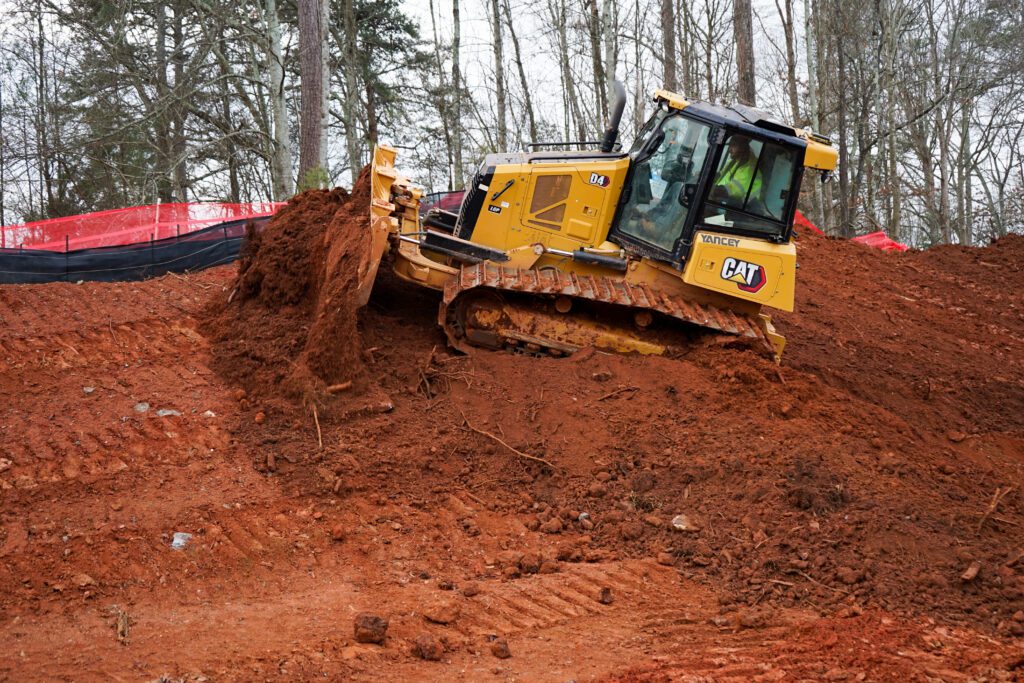
Residential development does more than change what is built on a site – it changes how the site handles water. As undeveloped surface ground, or area, gives way to roads, rooftops, sidewalks, and other impervious surfaces, less rainfall can be absorbed into the soil, and more becomes runoff that must be managed across a residential development.
That shift makes stormwater infrastructure a critical part of the development plan. Water needs a defined path from where it falls to where it can be safely collected, directed, and managed.
Proposed grades shape that path across the surface. Underground utilities influence where storm lines and structures can be installed, and construction sequencing determines how those systems come together as the site is built.
Planning stormwater infrastructure from the start helps project teams:
- Establish how runoff will move across the developed site
- Coordinate drainage infrastructure with grading and utilities
- Identify potential conflicts before construction begins
- Protect long-term site performance as the development matures
When those relationships are established from the start, stormwater management helps shape the development plan instead of competing with decisions already made.
Does Residential Development Change How Water Moves Across a Site?
Developing a residential site changes both the amount of runoff and the path water takes across the property. As roads, homes, and other impervious surfaces are added, more runoff must be collected and managed throughout the development; for example, clearing changes vegetation and soil conditions, and grading redirects existing flow paths.
At the same time, water has more built infrastructure to move across and around. These can include:
- Roadways that establish fixed elevations.
- Utilities that occupy underground corridors.
- Individual lots and common areas that can introduce their own grading and drainage requirements.
Stormwater infrastructure has to account for how these elements work together. The volume of runoff matters, but so does the path it takes before reaching an inlet, swale, storm drain, or detention facility.
As the site plan progresses, available drainage options can become more constrained. Accounting for stormwater requirements as the development takes shape gives engineers and construction teams greater flexibility to establish grades, drainage paths, and infrastructure locations that work together.
Stormwater Planning Must Be Part of the Overall Site Plan
Stormwater infrastructure does not operate independently from the rest of a residential development. For example, road elevations and lot grading influence where runoff travels, and underground utilities affect where drainage infrastructure can be installed. Each decision changes the conditions the stormwater system must work within.
That makes stormwater management an essential part of early site development planning.
When drainage requirements are considered after other elements of the site plan have been established, conflicts become harder to resolve. A proposed utility route may occupy space needed for a storm line, while final grades may not direct runoff toward the intended collection point.
Moving a drainage structure can create changes elsewhere in the plan.
Coordinating these elements as the plan develops preserves more options. Engineers can evaluate drainage alongside grading and utility layouts while changes can still be incorporated without disrupting construction.
The result is not simply a better stormwater plan. It is a more coordinated development plan.
Is it Important for Grading and Stormwater Infrastructure to Work Together?
Grading establishes how runoff travels across the surface, but that water ultimately needs somewhere to go. Stormwater infrastructure provides the collection points and drainage systems that receive and move runoff through the development. The performance of each depends on the other.
Even small elevation changes can redirect water away from an inlet or create low areas where water collects. A stormwater system may have adequate capacity, but it cannot effectively manage runoff that does not reach the intended collection point.
Coordinating grading and drainage allows the surface and underground systems to work together. Proposed slopes direct runoff toward inlets, swales, and other collection points. Stormwater structures can then be positioned at elevations that support the grading plan and maintain the intended flow.
Getting that relationship right during planning also reduces the need to correct grades or relocate drainage components once construction is underway.
Effective stormwater management starts at the surface. The infrastructure below ground can only manage the water directed to it.
Does Utility Coordination Protect Installation and Construction Sequencing?
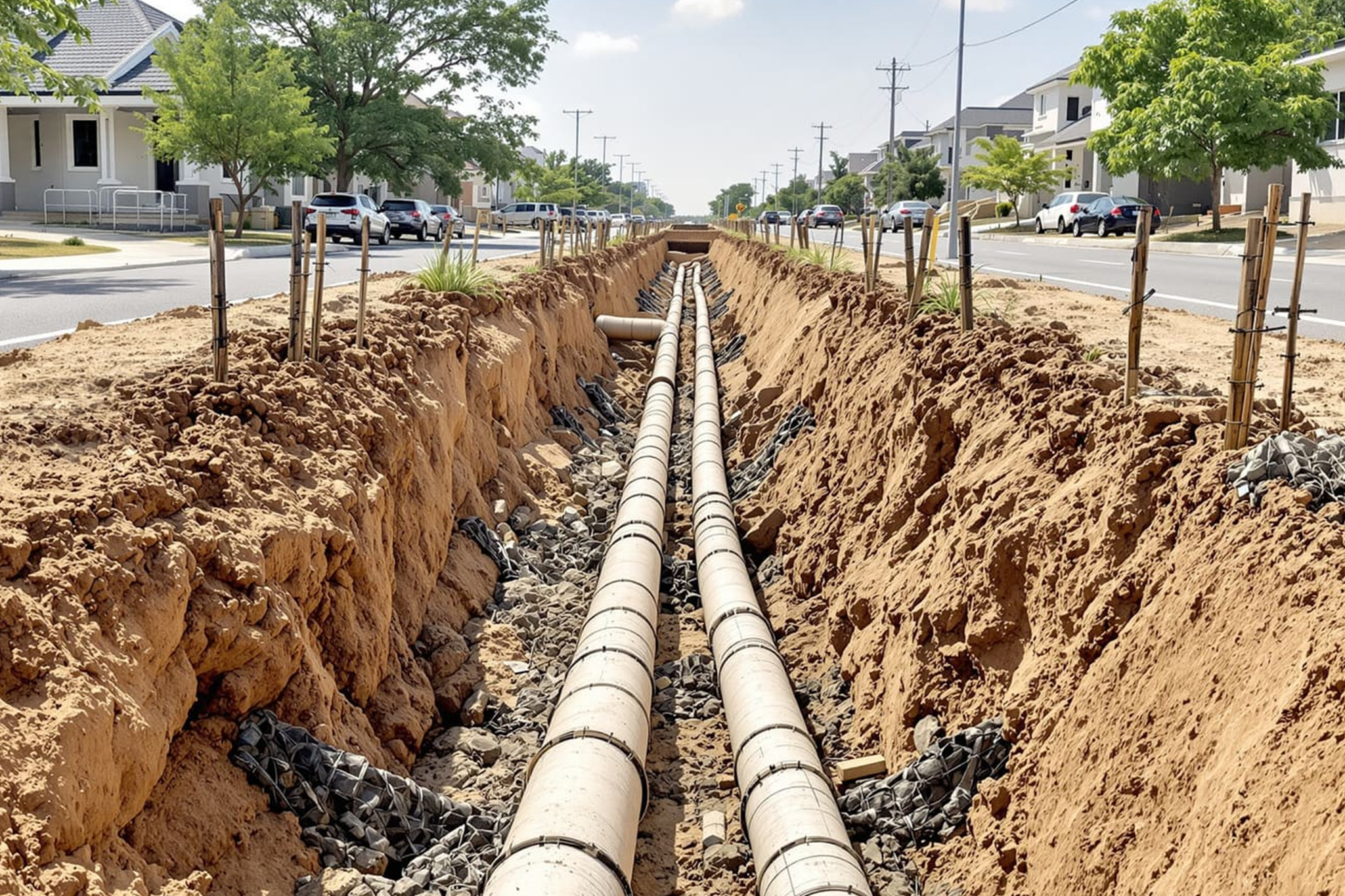
Stormwater infrastructure shares underground space with water, sewer, electrical, communications, and other utilities. Each system has its own alignment, elevation, clearance, and access requirements. Those requirements need to work together within the available space.
Installation order matters when completing one system restricts access to another. For example, a storm line may cross another utility at an incompatible elevation, or a drainage structure can interfere with a proposed utility route.
Once construction is underway, resolving these conflicts becomes more disruptive. Alignments may need to change. Additional excavation may be required. Completed sitework may need to be reopened or reworked.
Utility coordination during sitework planning allows teams to evaluate crossings, elevations, and installation sequence while adjustments can still be incorporated into the plan. It also helps preserve access for crews and equipment as construction progresses.
For residential construction, coordinating underground systems from the start protects more than the utility installation. It helps keep the overall construction sequence moving as planned.
Long-Term Performance Depends on Planning Beyond Installation
Stormwater infrastructure is built during construction, but its real job begins as the development takes shape and becomes occupied.
Once homes, roads, and landscaping are in place, the system must manage runoff across the finished development. Capacity must be sufficient for the water entering the system, and surface grades must continue directing runoff toward the intended collection points. The system must also account for erosion and sediment that can restrict water movement or reduce drainage performance over time.
Access becomes important as the system ages. Inlets, storm structures, and other components require inspection and maintenance. Their placement should allow that work to occur without unnecessarily disrupting roads, lots, or shared areas.
These considerations determine how well the infrastructure functions long after installation is complete. Planning for both performance and future maintenance helps protect the stormwater system, surrounding property, and the residential development it serves.
Building Stormwater Performance Into the Site From the Start
Stormwater infrastructure influences far more than drainage. It interacts with grading, utility installation, roadways, individual lots, and the sequence in which a residential development is built.
Planning those relationships from the start gives project teams greater control over how the pieces come together. Conflicts can be identified while plans still have flexibility. Sitework can follow a more efficient sequence. Stormwater infrastructure can be installed in locations and at elevations that support both construction and the finished development.
At Brock Civil, stormwater infrastructure is coordinated as part of the broader site development process. Our teams bring grading, excavation, utility installation, and drainage work together so each phase supports the next. This integrated approach helps reduce rework, protect schedules, and build residential infrastructure designed to perform over time.
For residential developments where stormwater, grading, and underground utilities must work together, coordinated sitework planning can establish the right approach before construction begins. Learn more about Brock Civil’s site development capabilities.
FAQs
What is stormwater infrastructure in a residential development?
Stormwater infrastructure includes the systems used to collect, direct, and manage runoff across a developed site. Depending on the project, these can include inlets, storm drains, pipes, swales, detention or retention facilities, and other drainage structures designed to control water movement.
Why should stormwater infrastructure be planned early?
Stormwater infrastructure is intricately connected to grading, roadways, lots, and underground utilities. Planning these elements together gives project teams more flexibility to resolve drainage and utility conflicts before construction begins and reduces the likelihood of rework later.
How does grading affect stormwater infrastructure?
Grading establishes the slopes and elevations that direct surface runoff toward collection points and drainage structures. When grading and stormwater infrastructure are coordinated, surface water can reach the systems designed to manage it rather than accumulating in low areas or moving along unintended paths.
Why is utility coordination important for stormwater installation?
Stormwater systems share underground space with water, sewer, electrical, communications, and other utilities. Coordinating routes, elevations, crossings, and installation sequencing from the start helps prevent conflicts that can require additional excavation, rework, or changes to the construction schedule.

 By Brock Civil