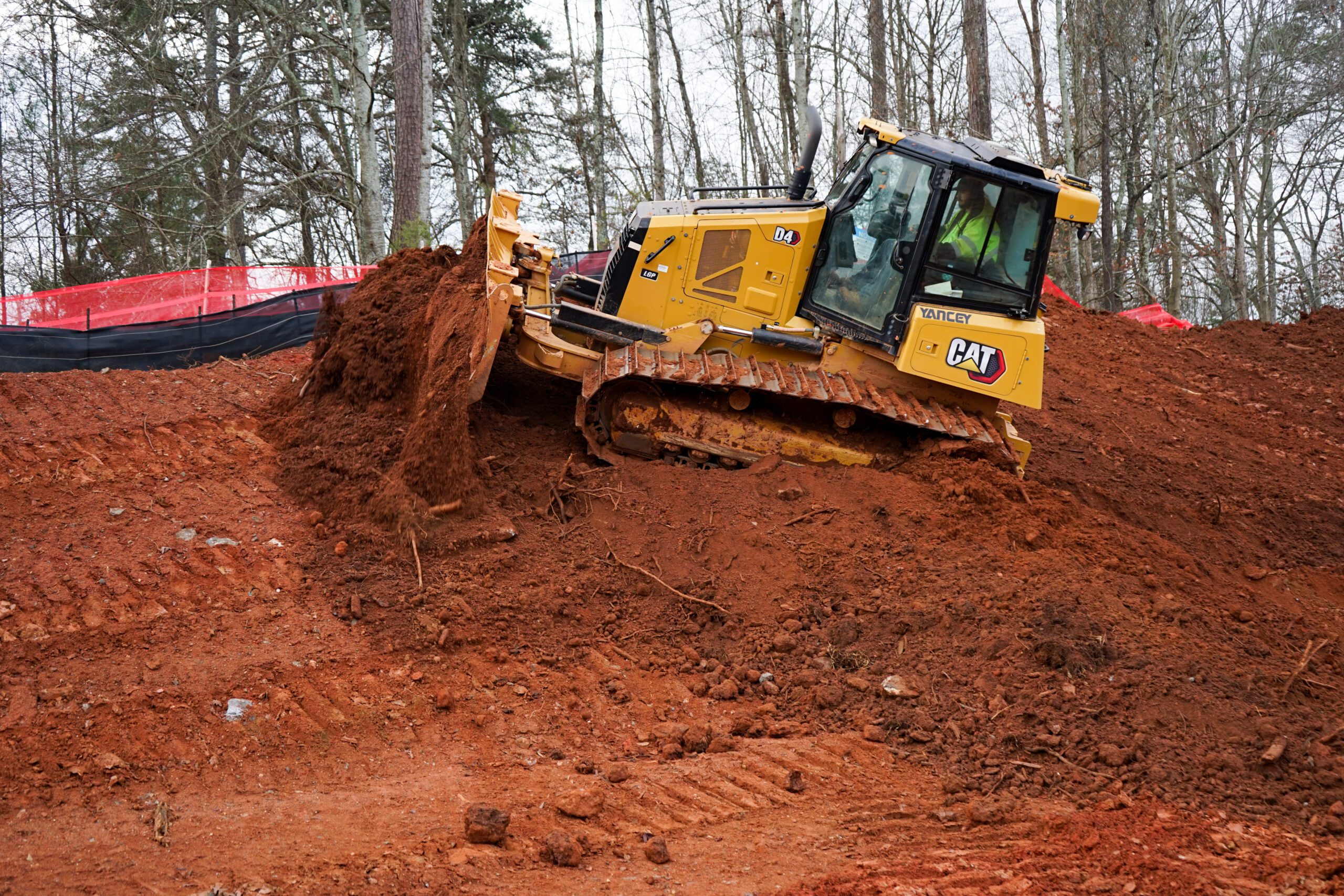
Grading and excavation are often discussed as if they serve the same purpose. But they play distinct roles in how a site is prepared, built, and ultimately performs over time.
To define the difference:
-
- Excavation removes earth to create space for foundations, utilities, and structural components.
-
- Grading reshapes that surface to establish elevation, drainage, and stability.
While they are closely connected, each serves a different function in site development.
When these phases are not clearly defined or coordinated, problems can begin early with expectations falling out of sync and sequencing becoming inefficient. Rework is the inevitable final product.
Identifying Key Differences Between Grading and Excavation
In civil construction, understanding the difference between grading and excavation is not just a matter of terminology. It directly affects how a site is shaped, stabilized, and prepared for construction.
When these activities are coordinated, they support efficient workflows and long-term performance so that problems don’t surface later in the project.
-
- Excavation removes earth to establish depth and structural space
-
- Grading shapes elevations to manage drainage and surface conditions
-
- Excavation sets the starting point for construction
-
- Grading prepares the site for stability and long-term performance
Strong site development depends on understanding how each phase contributes to the overall project.
Excavation Sets the Conditions for Construction
To create space for foundations, structural components, and utilities, excavation also removes earth to define depth and alignment, creating access for early construction.
This phase involves more than just digging. Soil conditions must be evaluated, materials must be removed, relocated, or replaced, and trenching must be done for utilities based on site requirements. The goal is to create a stable and workable foundation for what comes next.
When the excavation process is carried out with precision, many downstream issues are avoided, e.g., cuts remain stable, depth is consistent, etc. This allows work to progress in a planned sequence without disruption.
When excavation lacks precision, those same conditions become problems that affect every phase that follows.
Grading Shapes the Site for Stability and Drainage
Grading builds on excavation by refining the surface of the site. It establishes elevations and slopes that allow the site to perform as planned.
This includes directing water away from structures, creating stable working surfaces, and preparing the site for ongoing construction activity. Land leveling is part of this process, but the objective goes further. The site must support both construction and long-term performance.
When grading is not aligned with excavation, issues begin to develop across the site. Issues can arise with water not properly draining, surfaces losing stability, and elevation changes that may introduce unintended flow paths.
In these conditions, issues typically appear as:
-
- Standing water or poor drainage
-
- Soft or unstable surfaces
-
- Inconsistent transitions between elevations
When grading is aligned with excavation, the site performs consistently. Crews can work safely and efficiently with surfaces remaining stable, and drainage functioning as intended.
Coordination Between Phases Determines Project Efficiency
The difference between grading and excavation becomes critical during construction sequencing. First, excavation establishes the framework; then grading refines and prepares the surface.
These phases are intricately connected. Decisions made during excavation directly affect how grading can be executed. In some cases, grading requirements will influence excavation depth or material placement.
When excavation and grading are not coordinated, early planning decisions often do not hold up in the field , and crews are forced to adjust in real time as conditions shift.
The impact is felt through the job site as elevations must be corrected after the fact; materials must be moved more than once, and progress slows as teams respond to changing site conditions.
When excavation and grading are planned together, the transition between phases is intentional. The project moves forward with fewer interruptions and less rework.
Gaps Between Phases Lead to Ongoing Site Issues
When excavation and grading are treated as separate tasks, issues often carry forward into later phases of the project.
Common outcomes include:
-
- Slopes that do not effectively support drainage
-
- Subgrades that lack stability under load
-
- Elevation conflicts that impact utilities and paving
These conditions rarely remain isolated. They affect multiple aspects of the site and often require correction later in the project.
Avoiding these outcomes requires coordination during construction prep. Excavation contractors and site grading services must work from a shared understanding of how the site is expected to perform.
Integrated Planning Strengthens Site Development Outcomes
The most effective project approaches grading and excavation as part of a unified earthwork strategy. Each phase is planned with the next step in mind. Depth, elevation, and material movement are aligned with overall project goals.
This approach improves efficiency and reduces risk. Crews spend less time correcting conditions and more time progressing through planned work, allowing schedules to be more predictable and costs to remain predictable and stable.
Building a Stronger Foundation Through Coordinated Sitework
Understanding grading vs. excavation is essential for effective construction planning. These are not interchangeable services. Each plays a distinct role in shaping how a project performs.
Excavation establishes the framework. Grading refines and stabilizes the site. Together, they create the conditions needed for successful construction prep and long-term performance.
At Brock Civil, grading and excavation are approached as coordinated components of site development. Our teams evaluate site conditions early, plan sequencing carefully, and execute work with a focus on long-term outcomes. This approach reduces rework while improving efficiency and ensuring the site performs as intended.
For projects where grading or excavation challenges have already emerged, early evaluation can help identify underlying issues and prevent further impact. Learn more about how Brock Civil approaches grading, excavation, and site development.
At Brock Civil, we don’t just move earth — we protect it.
That’s the difference between completing a job and completing it responsibly.
FAQs
What is the difference between grading and excavation?
Excavation removes earth to create space for foundations, utilities, and structural components. Grading reshapes that surface by establishing elevation, slope, and drainage. Both are essential to site development, but they serve different roles in how a site is prepared and performs.
Which comes first, grading or excavation?
Excavation typically comes first, establishing the depth and framework of the site. Grading is followed by refining elevations and preparing the surface for construction. However, both phases must be planned together to ensure proper sequencing and long-term site performance.
Why is coordination between grading and excavation important?
When grading and excavation are not coordinated, early planning decisions often do not hold up in the field. This leads to rework, delays, and increased costs. Coordinated planning ensures that elevations, drainage, and material movement align with how the site is intended to perform.
 By Brock Civil
 By Brock Civil