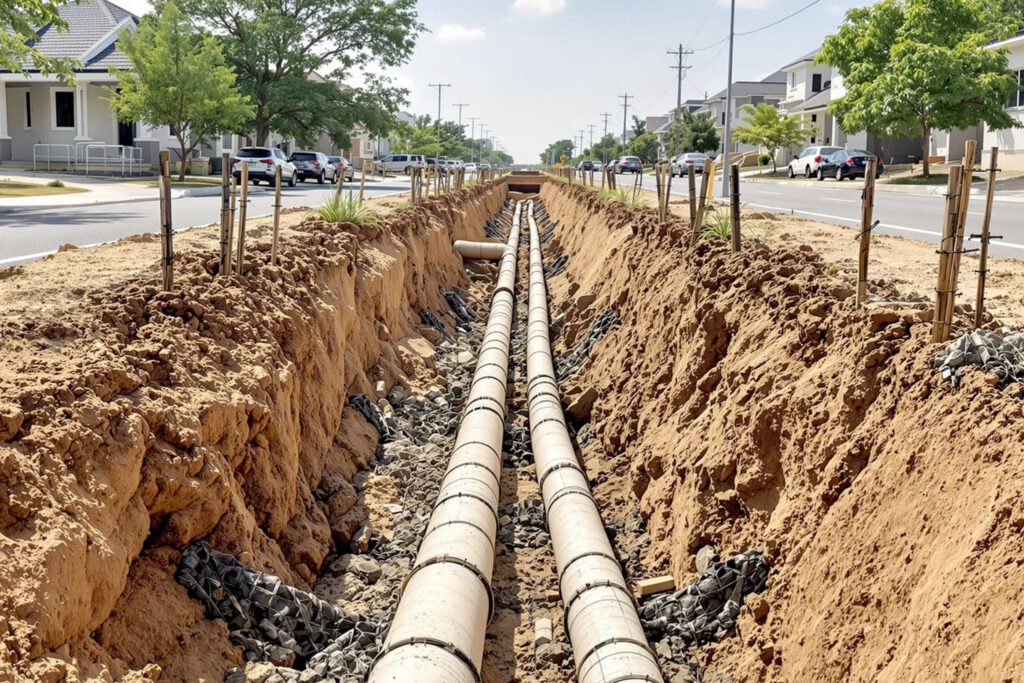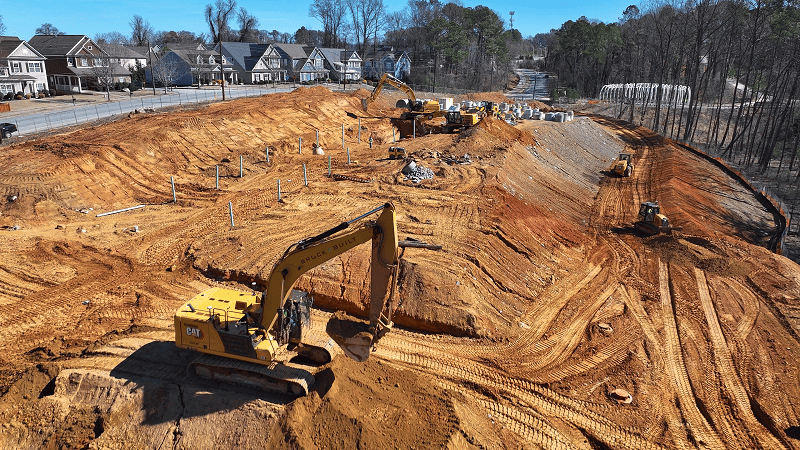
To set a construction project up for success, preparation must begin well before foundations are poured or structures rise. In civil construction, site preparation construction determines whether a project moves forward with stability or struggles with avoidable setbacks.
Early site preparation decisions shape access, safety, drainage, and sequencing. When planning is rushed or treated as an obligatory checklist, delays, rework, and cost overruns often follow. When planning is deliberate, projects benefit from more consistent execution and stronger long-term performance.
Why Site Preparation Sets the Direction for the Entire Project
Construction site prep establishes the physical and logistical conditions for every phase of work. Soil behavior, elevations, access routes, and utility coordination are all defined during this early stage.
When site preparation is incomplete, downstream work becomes reactive. Crews adjust grades in the field. Equipment access becomes restricted. Drainage paths shift as conditions change, and each adjustment introduces risk and inefficiency.
A robust site preparation plan determines how the site will function throughout construction, not just how it appears on a set of plans. When topography, soil conditions, and sequencing are evaluated together, the site becomes predictable, while schedules stabilize and safety improves so that work progresses with fewer interruptions.
Land Clearing Establishes Control and Access
Land clearing is often viewed as a starting task, but it plays a defining role in preparing a site for construction. How a site is cleared affects visibility, access, and safety from day one.
Clearing determines where equipment moves, where materials are staged, and how crews access different areas of the site. Poor clearing practices can leave debris and expose unstable soils or limit access, all of which slow progress and increase risk.
Environmental buffers like erosion-sensitive areas and future drainage paths must be preserved. When clearing aligns with grading plans and utility layouts, the site remains organized and controlled as work progresses.
Grading Services Shape Stability and Workflow
Grading services do more than establish elevations. They create a working surface that supports construction activity across the site.
Grades influence how equipment operates, how water moves, and how work is sequenced. When grading is not coordinated with other planning efforts, access issues can emerge, such as standing water or unstable surfaces.
Strong grading services need to be coordinated with drainage, utilities, and access planning in mind. Slopes should be designed to manage runoff, and subgrades should be stabilized to support equipment loads and future infrastructure.
Integrating grading early in site preparation creates stable platforms that support consistent productivity and quality throughout construction.
Construction Site Prep Requires Coordination Across Disciplines
Construction site prep involves multiple disciplines working in close sequence. Land clearing, grading services, utilities, and drainage must function as a coordinated effort.
Conflicts can arise when these elements are handled independently; e.g., utility installation may require grade adjustments; drainage paths may shift as clearing progresses, and late changes can disrupt schedules and increase the need for rework.
Integrated construction site planning anticipates these interactions. When survey data, field conditions, and sequencing decisions are aligned, crews can move forward with confidence rather than reacting to unexpected conditions or creating ongoing issues.
Integrated Site Prep Reduces Risk Before Construction Begins
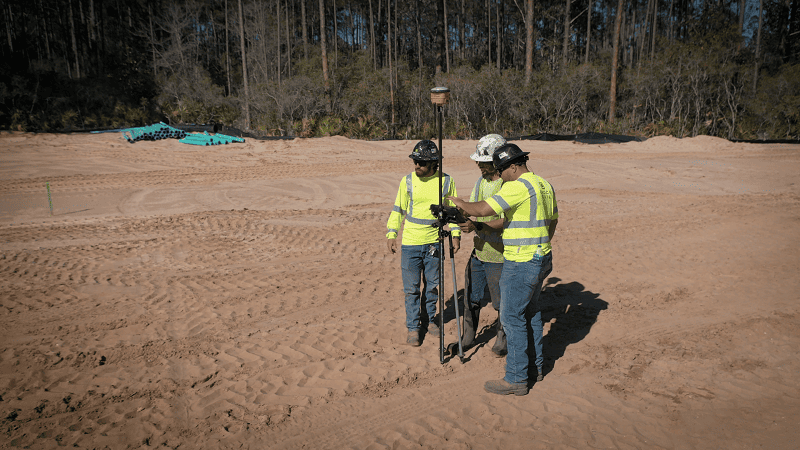
Many construction challenges originate during site preparation. Most challenges, such as drainage problems, unstable subgrades, and access limitations, rarely appear suddenly. These issues develop when early decisions are made without full coordination.
An integrated site preparation approach identifies risks before equipment is mobilized. As sequencing is reviewed, temporary and permanent drainage paths are established intentionally, and utility placement is coordinated with grading and access.
This proactive approach reduces uncertainty and limits corrective work later, which allows:
- Schedules can become more reliable.
- Budgets can remain protected.
- Teams can focus on execution instead of problem-solving, moving the project forward.
Building Strong Projects from the Ground Up
Every successful project reflects the quality of its preparation. Early site planning creates a foundation for safety, efficiency, and long-term performance, including land clearing to establish control, grading to create stability, and coordinated site prep to align every phase of the project lifecycle.
At Brock Civil, site preparation is approached as a disciplined, integrated process. Our teams evaluate site conditions early, coordinate planning across disciplines, and execute work with experience-driven insight. Our expert approach reduces project risk by limiting rework and supporting predictable outcomes throughout construction.
At Brock Civil, we don’t just move earth, we protect it.
That’s the difference between completing a job and completing it responsibly. Contact us to learn more.

 By Brock Civil