In 2026, the reality of developing a site for a large project is more complex and volatile than ever. Owners and developers must contend with the rising costs of materials (especially as tariffs rise and fall), labor shortages, pressures brought from regulatory agencies, and overall changing climate considerations.
It’s fair to say that ‘site prep’ is no longer a single line item on a budget or proposal but must be approached as risk-informed cost planning.
Land development costs are not simply about prepping a site for construction. Today, it’s about anticipating risk on all levels, managing the uncertainty of changing circumstances, and factoring in the financial and insurance realities of the project.
Breakdown of the Core Cost Components of Site Development
Preparing land for a construction project includes these specific components:
- Clearing the land and removing vegetation
- Grading and earthwork
- Excavation and soil stabilization
- Wet and dry utility installation, e.g., water, sewer, electric, gas
- Site access and road construction
- Stormwater management, drainage, erosion control
Complicating the preparation and budgeting process further is the fact that each of these elements is heavily dependent on the other. For example, land that is inadequately graded often leads to drainage issues and requires expense rework.
Additionally, there are unique variables to every site, including soil considerations, topography, and site accessibility. A site with limited access or steep terrain will increase the initial costs and complexity of development, with even small miscalculations leading to large potential budget overruns.
Hitting a Moving Target – Variables Informing Land Development Costs in 2026
There are industry-wide variables that all owners, investors, and developers are having to navigate in 2026. While none of these are new, the volatility associated with the costs and availability makes them an ongoing challenge.
- Shortages in labor (skilled and unskilled) continue to be a factor, as does rising wage costs.
- Materials remain volatile and costs for things like fuel, aggregates, and piping seem to fluctuate constantly making accurate pricing for budgets and proposals difficult.
- Equipment availability is pressured through increased demand and the ongoing problem with supply chain disruptions. This is leading to higher rental costs, difficulty scheduling equipment, and longer lead time.
- Environmental compliance requirements, including storm management and permitting processes in most municipalities continue to grow in complexity.
- Soft costs, specifically insurance premiums, can be unpredictable due to changing risk profiles bringing stricter coverage requirements and higher out-of-pocket costs.
Best Practices for Controlling Site Development Costs Through Strategic Planning in 2026
By taking a proactive approach and working with civil engineers well versed in best practices, controlling site development costs can reflect a complex architecture of engineering, financial, environment, and insurance considerations.
Best practices should include:
- Ensuring comprehensive pre-development assessments are conducted.
- Thorough and complete environmental and geotechnical studies are obtained and assessed early.
- Establishing a team of experts from the outset to include engineers, contractors, and legal/insurance/accounting providers.
- Assessing realistic risk scenarios and building contingency plans to meet potential setbacks.
- Manage project cash flow with realistic phasing for development to reduce risk and exposure.
By anticipating and planning for potential risks at the outset, projects can avoid costly delays to bring the development in on time with a minimal number of issues.
Specific Areas That Require Special Attention When Budgeting/Planning
Excavation Cost Estimates – Where Budgets Can Win or Lose
Accurately predicting the breadth of excavation work that will be needed on a site is often one of the most difficult components of a site development plan.
Factors influencing costs can include:
- Depth and volume required of excavation
- Composition of soil throughout a project, e.g., rock, clay, sand
- Groundwater levels
- Drainage conditions
- Possibility of hazardous materials
Even the most carefully planned projects can encounter unexpected conditions that derail workflow. Early investment in sound geotechnical studies and analyses is essential to get accurate forecasting and hit budget targets.
Factoring in Climate and Environmental Factors Early
Today, in 2026, climate and environmental factors are no longer optional. Site prep pricing has to take into consideration climate-related risks, such as changing weather patterns, flooding, wildfires (including urban wildfires), hurricanes. From a development standpoint, this can include:
- Stormwater drainage, retention, and detention
- Defensible space planning for fire-resistant building materials and landscaping
- Slope stabilization and reinforced grading
The Soft Costs Connection
An often overlooked component of land development cost is the ‘soft costs’ associated with the insurance and financial risk of a project. Poor site preparation, missing studies, or failure to review long-term potential site conditions, can all lead to inaccurate cost estimates that impact:
- General liability exposure for the owners and investors
- Project funding
- Lender confidence
Today, the importance of site development cost as a driver of protecting long-term assets is imperative.
Technology Brings a Data-Forward Approach to Cost Accuracy
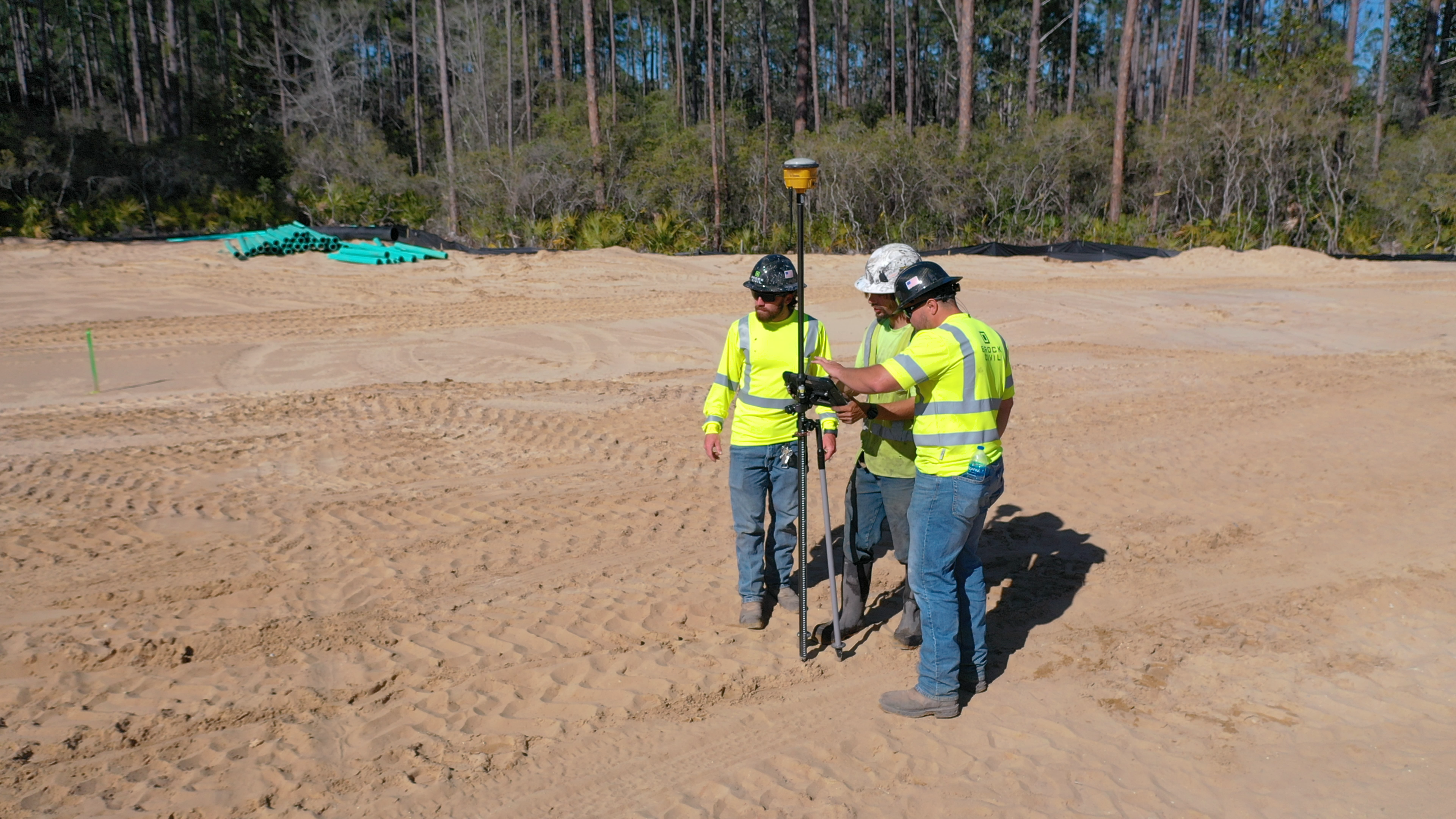
The good news is that technology in 2026 helps to bring greater precision to forecasting site development costs. Tools available today include GIS mapping, AI-assisted modeling, and drone surveys for more accurate site assessments.
Digital modeling and simulation allow teams to project different conditions and scenarios before planning even begins. Bringing a more proactive approach to cost management, developers and engineers can reduce uncertainty and align effectively with both stakeholders and the contractors doing the work.
Conclusion – Estimates as a Strategic Investment
Owners, investors, and developers that approach land development cost strategically, rather than as a single-line item for a budget, will be better positioned to reduce risk and deliver on successful projects.
At Brock Civil, our team brings a full compliment of heavy civil construction professionals with decades of experience in the Southeast United States. Contact us to learn more about our comprehensive infrastructure solutions and how we can help you determine the optimal site development cost projects for your project.
Frequently Asked Questions
1. Why is land development cost increasing in 2026?
From volatile material costs to labor shortages to changing weather patterns, land development costs are constantly fluctuating making budgeting and risk management exponentially harder. Today, proactively using best practices and the evolving technology available allows owners and investors to have a firmer handle on the overall costs for a heavy infrastructure project.
2. What strategies help reduce site development cost?
Early planning that includes accurate forecasting, broad site analysis, and contingency planning, allows you to mitigate risk. At Brock Civil, our team of experts understand project budgeting in this volatile time and work with clients to ensure minimal surprises along the way.
3. How can I improve the accuracy of an excavation cost estimate?
In 2026, accurate excavation cost estimates require detailed geotechnical studies, site surveys, and data-driven modeling to identify soil conditions, groundwater levels, and potential risks.
 By Brock Civil