Water is one of the most powerful forces on any worksite. It reshapes soil, challenges structural integrity, and exposes weaknesses in site design faster than most variables encountered during construction. In civil construction, grading and drainage decisions determine whether water remains controlled or becomes a long-term liability.
Many water-related issues do not surface during early phases of construction. They develop over time, often after the site is occupied or infrastructure is in use. Ponding near foundations, erosion along slopes, and settlement in paved areas are rarely isolated events. They are typically the result of grading and drainage decisions made early in the project lifecycle.
Strong site performance begins with a disciplined, proactive approach to grading and drainage planning.
Water Movement Begins the Moment Grading Starts
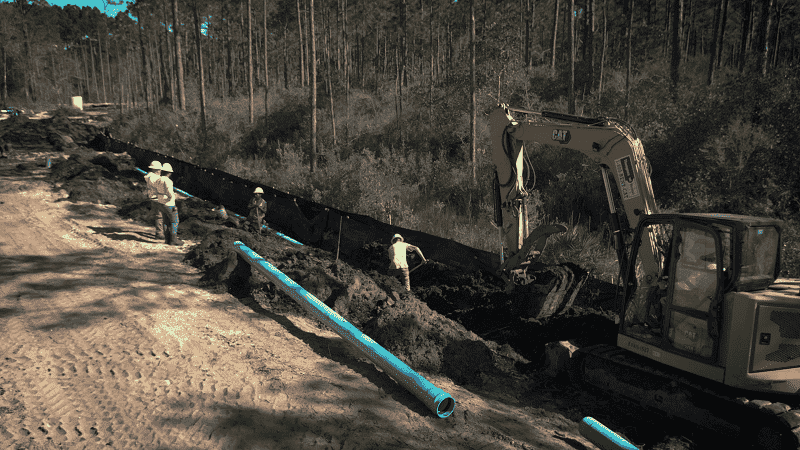
During construction, water begins moving as soon as soil is disturbed. Runoff patterns shift once grading starts, and natural absorption changes. Slopes that once drained effectively may begin directing water toward structures or utilities.
When grading and drainage planning happen late in the design process, surface drainage becomes an afterthought. Crews are forced to react in the field, making adjustments or installing temporary fixes to address emerging issues.
Late planning increases risk, and rework becomes more likely. Long-term maintenance costs often rise as a result.
A proactive planning approach identifies how water will move before equipment is mobilized. It aligns sitework with topography, soil conditions, and downstream systems. When runoff paths are intentional, the site performs predictably under both routine rainfall and severe weather events.
Lot Grading Sets the Foundation for Performance
This phase of sitework does more than shape soil to match elevations on a plan. It determines how water interacts with every surface on the property.
Improper lot grading can direct water toward foundations instead of away from them. It can create low points where water pools and saturates subgrades. Over time, that moisture compromises pavement integrity and increases the risk of unintended settlement.
Effective grading and drainage work together to control these outcomes. Slopes encourage positive flow, while subgrades provide stable structural support. Surface transitions prevent standing water from forming across the site.
When a lot of grading is executed with precision, long-term liability decreases. Structures, sidewalks, roadways, and utilities remain protected from avoidable water intrusion. Most importantly, consistent site performance is maintained well beyond project completion.
Residential Drainage Solutions Require Integrated Site Planning

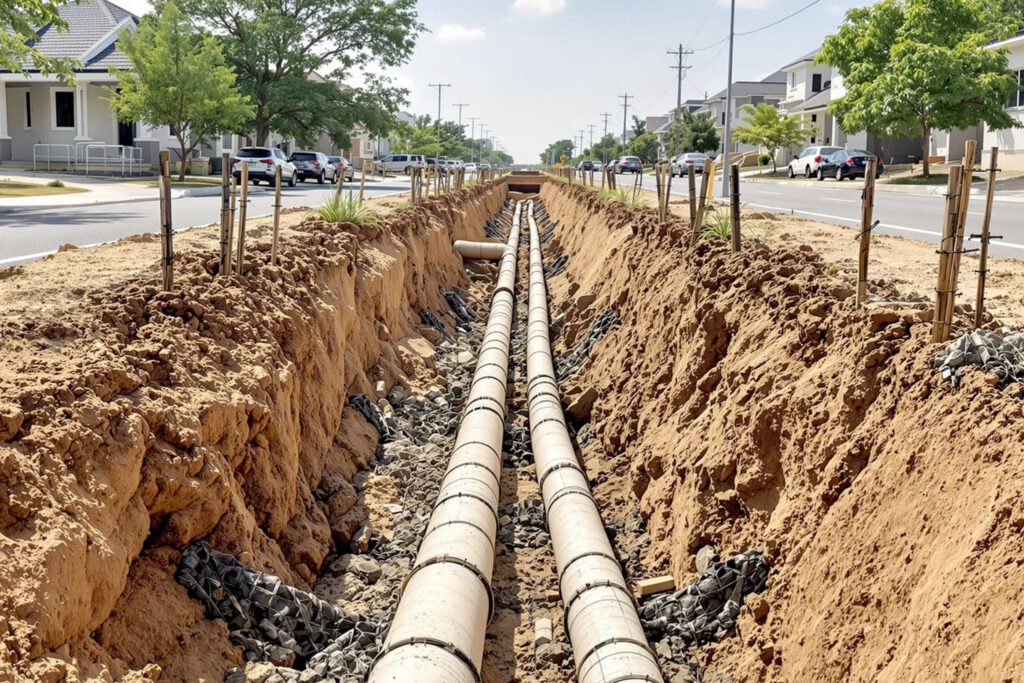
Residential drainage solutions require careful coordination between grading, utilities, and stormwater infrastructure at the site level. In residential developments, even minor drainage failures can quickly affect multiple lots and shared infrastructure.
Backyard flooding, saturated lawns, and driveway runoff often trace back to incomplete grading and drainage coordination during early site development. Surface slopes may meet minimum code requirements yet still fail under heavier rainfall conditions.
Integrated planning reduces these risks. Storm structures, swales, and subsurface systems must align with final grade elevations. Each component supports the next. When grading and drainage decisions are made in isolation, performance gaps emerge.
Effective residential drainage solutions account for long-term maintenance, soil stability, and downstream capacity. The goal is not simply to pass inspection. The goal is to deliver infrastructure that performs reliably through seasonal change.
Erosion Control Begins with the Right Grade
Erosion control is often viewed as a temporary measure. In reality, it begins with a smart grading strategy. Steep, unprotected slopes accelerate runoff, while poorly compacted areas allow soil displacement. Without coordinated grading and drainage, erosion becomes inevitable.
Strong erosion control planning evaluates slope design, soil composition, and water velocity. Temporary stabilization measures protect exposed areas during construction and permanent grading solutions to reduce the likelihood of soil movement after completion.
When grading and drainage align with erosion control planning, sediment loss decreases; infrastructure remains stable, and surrounding properties and waterways stay protected.
The result is a site that holds up under pressure.
Integrated Planning Reduces Risk and Rework
Grading and drainage failures rarely stem from a single mistake. They develop when decisions are fragmented across disciplines, e.g., engineers may design a storm system that functions only on paper; contractors may execute elevations inaccurately. When communications break down between teams, unintended water issues often follow.
Integrated planning closes these gaps. Survey data, field adjustments, utility placement, and surface grading are aligned into one coordinated effort with potential conflicts identified early, reducing rework. Owners benefit from predictable schedules, and developers avoid costly corrections.
This level of coordination requires early collaboration and field-driven insight. At Brock Civil, integrated planning is embedded into how projects are evaluated, sequenced, and executed. The result is reduced risk, stronger performance, and greater cost control over the life of the site.
At Brock Civil, we don’t just move earth, we protect it. Contact us to learn more.

 By Brock Civil