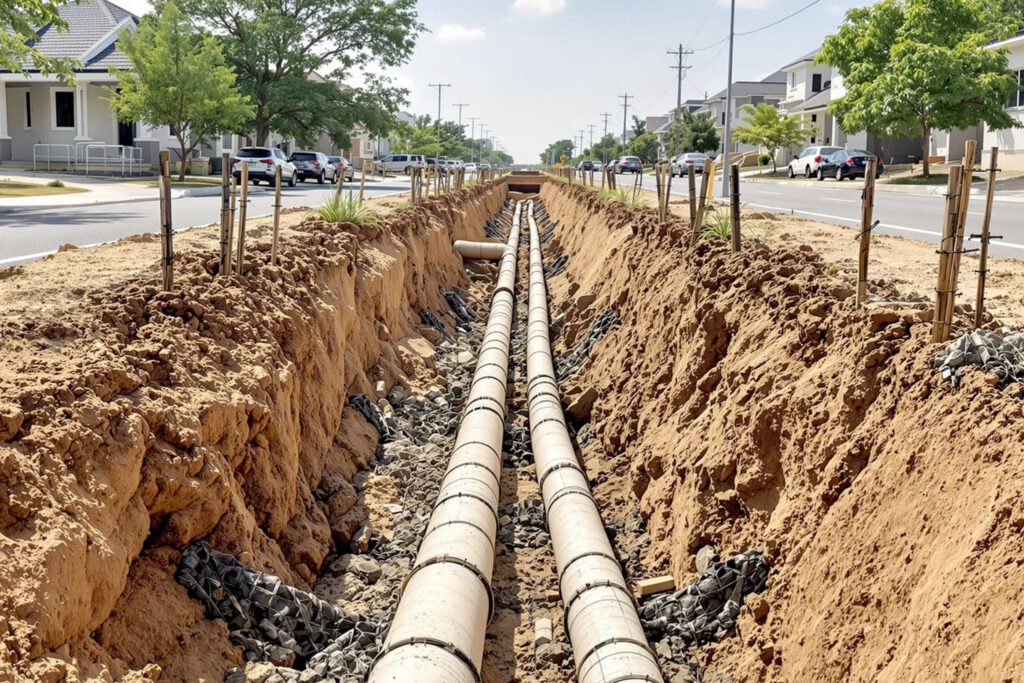
Without a doubt, underground utility work can have a significant impact on a construction schedule. Discovering a conflict during excavation can stop work, require design changes, or force crews to adjust sequencing while other phases are pushed back.
Many of these delays can be prevented before equipment reaches the site.
Reliable underground utility services depend on understanding existing conditions, coordinating new utility infrastructure, and planning installation around the work that follows. When those decisions are made during the early planning phase, crews have a defined path forward and potential conflicts can be resolved before they affect the construction schedule.
Strong underground utility planning helps teams:
-
- Identify potential utility conflicts before excavation
- Coordinate installation with grading and other sitework
- Establish sequencing around critical infrastructure
- Reduce field changes that lead to costly rework and unexpected delays
In heavy civil construction, the work below ground directly impacts everything built above it.
Can Utility Conflicts Bring Progress to a Halt?
Underground utilities compete for limited space. Water, sewer, stormwater, electrical, and communications infrastructure must maintain required elevations and clearances while fitting within the overall site plan.
Existing utilities add another layer of complexity. Records may not fully reflect actual field conditions. Existing locations can also influence the route, depth, or installation of new systems.
When a utility conflict is discovered after excavation begins, progress can stop while teams determine the best path forward. A utility may need to be relocated and grades or alignments may require adjustment, putting other scheduled work behind until the issue is resolved.
Early utility coordination gives project teams time to identify these constraints before construction is underway. The goal goes beyond knowing where utilities are located. Teams need to understand how each system interacts with the site plan and the work that follows.
Utility Planning Must Align With Grading and Sitework
Underground utility installation is connected to the development of the entire site. Grading establishes elevations that influence utility depth, while drainage requirements shape stormwater infrastructure. Site access and construction sequencing determine when installation can move forward safely and efficiently.
That makes utility coordination an essential part of sitework planning.
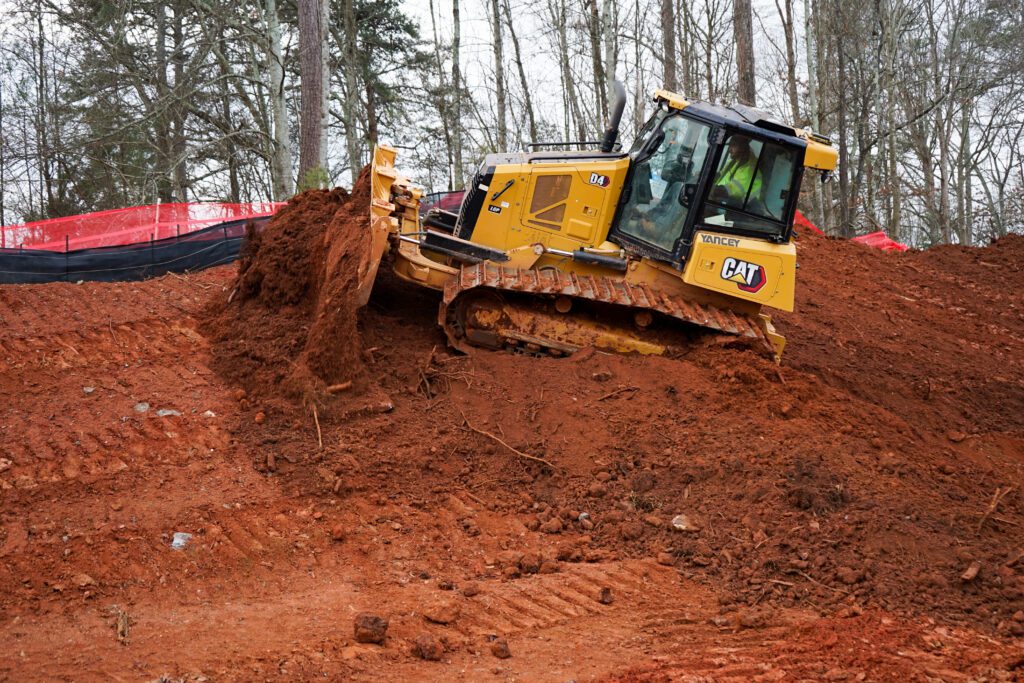
When grading advances without accounting for underground infrastructure, completed work may need to be reworked. Materials may need to be moved more than once. Changes in grade or site access can also make it more difficult for crews and equipment to reach areas where utilities still need to be installed.
Coordinating the work early creates a more efficient sequence. Excavation and utility installation can progress before backfill and grading prepare the site for the work that follows.
Strong sitework planning considers what needs to happen below ground before work moves forward above it.
How Does Construction Sequencing Protect Project Momentum?
Even a well-designed utility plan can create delays when installation occurs at the wrong point in the construction sequence.
Underground utility services often need to be completed before paving, foundations, or other permanent improvements restrict access. Equipment movement also affects timing. Installing utility infrastructure too early can leave it exposed to potential damage, and waiting too long can require completed sitework to be removed or reworked.
A coordinated sequence considers these dependencies before construction begins.
During early planning, project teams determine how utility installation fits with the phases that follow. When that sequence is clearly established, teams have better visibility into schedule risk and are less likely to face major sequencing changes once construction is underway.
The goal is to install underground utilities at the right point in the schedule so later phases can proceed without having to work around unfinished infrastructure or reopen completed sitework.
How Can Early Coordination Limit Field Changes and Rework?
Plans provide the framework for construction, but actual site conditions determine how that plan performs in the field. Experienced utility planning considers both.
Comparing design requirements with field conditions early creates more opportunities to identify and resolve potential conflicts. Utility depths can be reviewed against proposed grades, installation routes can be evaluated against access requirements, and existing infrastructure can be incorporated into the plan before excavation begins.
Without that coordination, decisions made during planning may not translate cleanly to actual site conditions. Crews then have to respond in real time.
Those adjustments have a cumulative impact. Work can slow or stop while teams quickly evaluate alternatives. Completed sitework may need to be reopened or reworked. Labor and equipment may need to be redirected from other scheduled phases of the project.
Not every field adjustment can be anticipated during planning. Early utility coordination reduces the likelihood that preventable conflicts turn into costly rework and schedule delays.
Integrated Utility Planning Protects Long-Term Performance
Keeping construction on schedule is only part of the value of underground utility planning. The infrastructure also needs to perform reliably long after construction is complete.
Consideration and planning regarding these elements can protect long-term performance:
-
- Installation depth and soil conditions that will influence performance below grade.
- Backfill and grading that can affect stability.
- Drainage that determines how water interacts with the completed system over time.
Utility placement also affects what happens after construction. Access must be considered for future maintenance, repairs, or system expansion. Planning for those needs early helps protect the long-term performance of the infrastructure.
This is where integrated planning matters. Underground utility services should support the performance of the entire site, not simply meet an immediate installation need.
When utility infrastructure is coordinated with the broader site plan, both construction requirements and long-term use inform the decisions being made. That helps protect infrastructure performance while reducing the likelihood that one system creates challenges for another.
Planning Below Ground Keeps the Project Moving Above It
Underground utility delays can quickly disrupt grading, paving, structural work, and other scheduled phases. Precisely identifying conflicts early and coordinating installation with the broader site plan gives project teams more control over those risks.
At Brock Civil, underground utility services are integrated into the site development process. Our teams coordinate utility installation with grading, excavation, and construction sequencing so potential conflicts can be identified before they disrupt progress. This field-driven approach reduces rework, protects project momentum, and supports infrastructure built for long-term performance.
For projects with complex utility or sitework requirements, early coordination can establish the right sequence before construction is underway. Learn more about Brock Civil’s site development and underground utility capabilities.
FAQs
What are underground utility services?
Underground utility services include planning and installing below-grade infrastructure such as water, sewer, stormwater, electrical, and communications systems. Successful installation depends on coordinating these systems with grading, excavation, site access, and the broader construction plan.
How can underground utility planning prevent construction delays?
Early planning identifies utility conflicts, sequencing requirements, and site constraints before they reach the field. This gives teams time to coordinate installation with grading and other construction activities, reducing rework and unexpected schedule disruptions.
When should utility coordination begin on a construction project?
Utility coordination should begin during early sitework planning before excavation and installation start. Reviewing existing utilities alongside proposed infrastructure, grading requirements, and construction sequencing gives teams more time to resolve conflicts before they disrupt field operations.
Why should underground utilities be coordinated with grading?
Utility elevations and grading directly influence one another. Proposed grades affect installation depths, while utility routes influence how grading and drainage work proceeds. Coordinating both helps prevent elevation conflicts, repeated earthwork, and rework to completed site improvements.

 By Brock Civil